Brandteliers Visits Al Balad for Heritage Hotel Research
Our team travelled to Jeddah to conduct field research for a heritage hotel branding project in Al Balad, the UNESCO-listed historic district undergoing restoration as part of Saudi Arabia's broader cultural and tourism development.
Heritage hospitality branding demands understanding beyond photographs and secondary sources. Spatial rhythms, material textures, light quality and social patterns shape how guests experience place. These elements cannot be properly interpreted from distance.
The visit focused on documenting architectural detail, observing community interaction and understanding how contemporary creative culture sits alongside centuries-old building traditions. This material will inform brand positioning, visual identity development and guest experience design for the property.
Architectural Provenance and Material Context
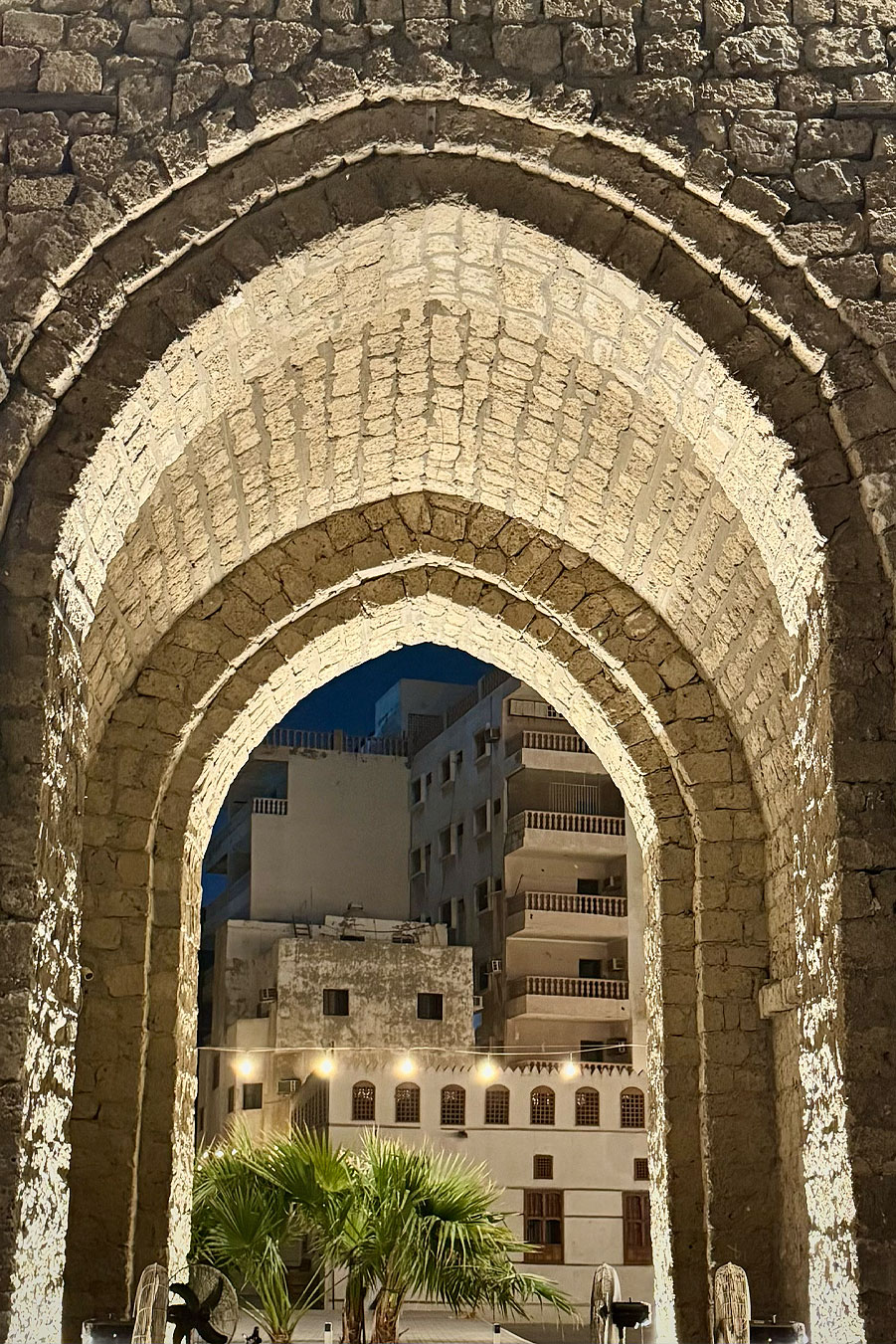
Al Balad's coral stone buildings and wooden roshan window screens represent construction techniques developed in response to Red Sea climate and social customs. The architecture manages heat through mass and ventilation while enabling privacy through geometric screening.
These are not decorative choices. They are functional responses to environment and culture. Heritage hotel branding that references this architecture superficially misses the strategic opportunity. Understanding why these building methods evolved enables authentic positioning around climate response, craftsmanship and cultural values.
Our documentation focused on construction detail, material weathering patterns and how restoration work maintains structural principles while enabling contemporary hospitality use. This informs decisions about which architectural references translate meaningfully into brand identity versus which become pastiche.
The narrow streets, courtyard layouts and vertical proportions create spatial experience distinct from modern Jeddah. Guests arriving from contemporary districts experience contrast that positions the heritage property as temporal counterpoint rather than just accommodation choice.
Creative Community and Cultural Evolution
Beyond preserved architecture, Al Balad demonstrates how cultural heritage evolves through contemporary creative practice. Artist studios, small galleries and craft workshops occupy restored buildings alongside traditional commerce.
This matters for brand strategy. Heritage hotels positioned purely around historical preservation risk becoming museum experiences. Properties that integrate living creative culture attract guests seeking contemporary engagement with tradition rather than static historical recreation.
The district's creative energy reflects broader shifts across Saudi Arabia as Vision 2030 cultural initiatives support contemporary art, design and hospitality development. Heritage properties that position within this evolution rather than against it serve both domestic and international luxury segments more effectively.
We observed how artists interpret traditional motifs through contemporary media, how cafes blend Saudi hospitality customs with specialty coffee culture, and how craft practitioners adapt traditional techniques to current design applications. These patterns inform programming recommendations for heritage hotels seeking authentic cultural positioning.
Culinary Culture and Social Patterns
Traditional eateries, family-run restaurants and contemporary cafes throughout Al Balad demonstrate how food culture bridges heritage and modernity. Small kitchens serve recipes maintained across generations. Coffee shops attract both neighbourhood residents and cultural tourists.
The social dynamics matter as much as the menus. How spaces facilitate gathering, how service unfolds, which times attract which communities. Heritage hotel F&B concepts must understand these patterns to feel authentic rather than staged.
Textures, ingredient sourcing, preparation methods and service rituals observed during the visit provide reference for F&B strategy development. The goal is not reproducing traditional restaurants within hotels but understanding culinary values that position heritage properties credibly within local food culture.
Saudi hospitality traditions around generosity, coffee service and date presentation inform how heritage hotels can deliver contemporary luxury while honouring cultural customs. Properties that understand the social meaning of these practices differentiate from those that apply them decoratively.
Material Documentation for Brand Development
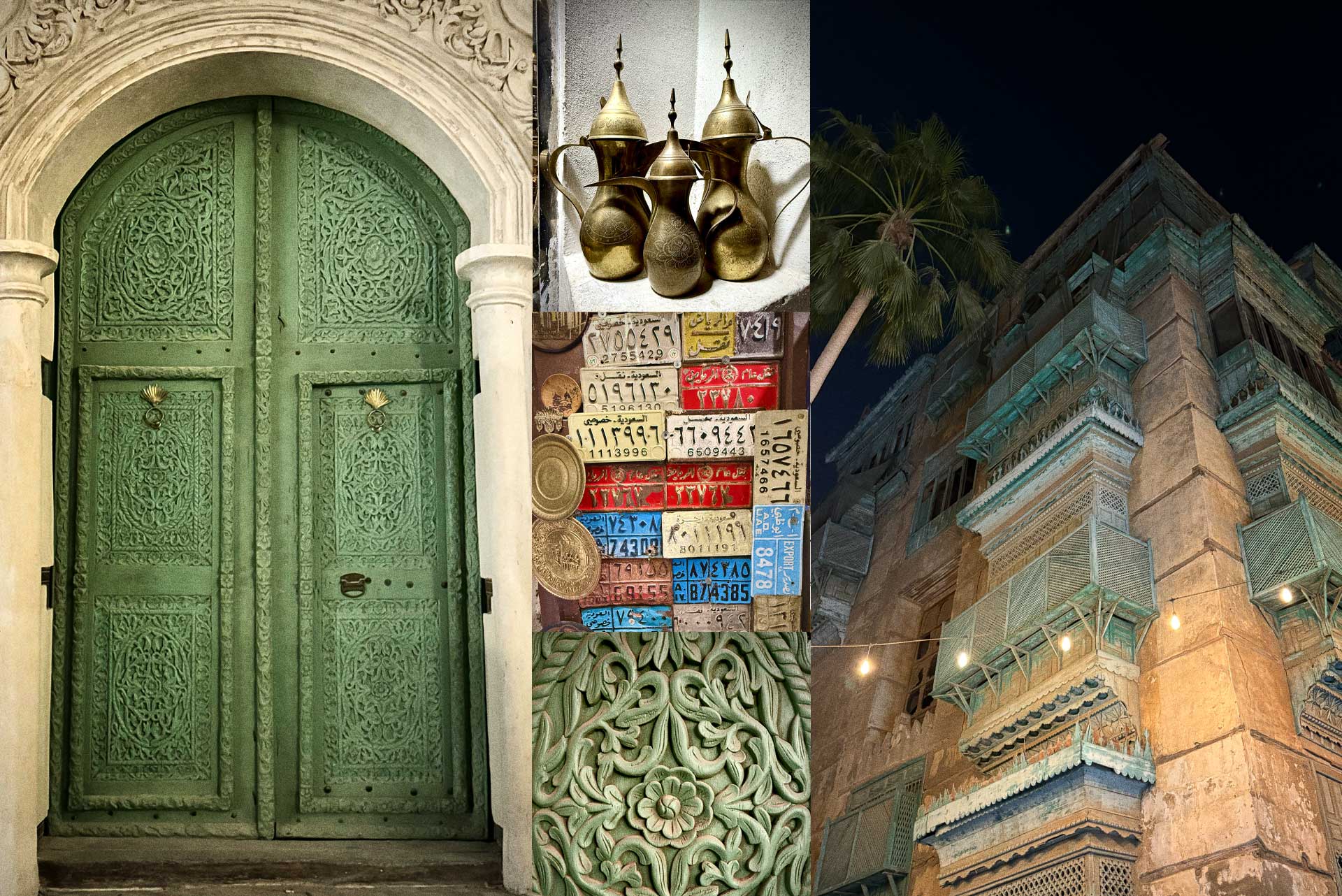
We captured extensive visual documentation throughout Al Balad. Architectural details, material surfaces, colour palettes, typography, signage vernacular, craft objects, spatial proportions and light conditions.
This archive becomes reference during brand identity development. Typography selections respond to traditional calligraphy and vernacular signage. Colour palettes derive from coral stone, weathered wood, textile patterns and natural materials. Material specifications for interiors draw from construction traditions rather than international luxury hotel standards.
The documentation also captures contemporary creative work, showing how artists and designers working in Al Balad interpret heritage through current practice. This informs recommendations about which traditional references feel authentic versus which feel nostalgic or touristic.
Physical samples collected during the visit including stone fragments, wood samples, textile swatches and craft examples provide tactile reference that photographs cannot fully communicate. These materials guide interior design specifications and artisan partnership development.
Strategic Context: Heritage Hospitality in Saudi Arabia
This project sits within broader context of Saudi Arabia's hospitality sector transformation. The Kingdom targets 150 million annual visitors by 2030, requiring substantial hotel development including heritage properties in culturally significant districts.
Al Balad represents one of several historical areas receiving investment for tourism development. Properties entering these markets compete against both international lifestyle hotel groups and established Gulf hospitality brands.
Heritage positioning creates differentiation opportunity when executed authentically. Properties that demonstrate genuine cultural understanding through architecture, programming and community integration command positioning advantages that generic luxury cannot replicate.
However, heritage branding also creates risk. Communities sensitive to cultural appropriation, tourism commodification and preservation integrity scrutinise how properties represent local heritage. Hotels require governance ensuring brand expression respects cultural context while serving contemporary hospitality expectations.
Our field research addresses this by grounding brand development in observed community dynamics, documented architectural traditions and understood cultural evolution rather than surface aesthetic references.
Application to Brand Strategy
Insights from the Al Balad visit inform multiple brand development stages for the heritage hotel project.
Positioning strategy will articulate how the property relates to the district's architectural heritage, creative community and cultural evolution. This requires clarity about whether the hotel positions as heritage preservation, contemporary cultural hub or synthesis of both.
Visual identity development will reference documented architectural details, traditional craft patterns and material palettes observed throughout Al Balad. Typography, colour systems and graphic elements will demonstrate provenance rather than generic heritage aesthetics.
Guest experience design will incorporate spatial rhythms, social patterns and cultural customs documented during field research. Service protocols, F&B concepts and programming calendars will reflect understanding of how heritage and contemporary culture coexist in the district.
Governance frameworks will define which cultural references remain fixed for brand authenticity and which adapt as the district continues evolving. This prevents brand expression from becoming static historical recreation disconnected from living community context.
Our Perspective
Heritage hotel branding succeeds when grounded in direct observation rather than assumption. Al Balad offered essential context for understanding how architectural tradition, contemporary creative culture and social customs intersect within a heritage district undergoing restoration.
The field research documented material detail, spatial experience and community dynamics that inform brand strategy, identity development and guest experience design. This foundation enables positioning that feels authentic to cultural context rather than imposed from external luxury hospitality conventions.
As Saudi Arabia develops heritage tourism infrastructure within Vision 2030 objectives, properties that invest in genuine cultural understanding will differentiate more effectively than those applying heritage aesthetics superficially. The challenge is respecting cultural provenance while delivering contemporary hospitality that serves both domestic and international luxury segments.
Our work on this project will demonstrate how heritage branding creates commercial value through authentic cultural positioning rather than decorative historical references. Al Balad's architectural legacy, creative community and cultural evolution provide strategic foundation for brand development that honours the past while serving the district's evolving future.